SUBMIT A SUPPORT REQUEST


A school website is no longer just a compliance requirement.
It is your:
- First impression for prospective parents
- Admissions tool
- Communication hub
- Inspection support system
- Recruitment showcase
- Trust-building platform
And in 2026 and beyond, expectations are only increasing.
A high-performing school website does more than “look good.” It works strategically for your school.
This guide breaks down exactly what that means.
1. Clear Structure Before Clever Design
Many school websites struggle not because of design — but because of structure.
Over time, pages are added:
- Policies
- Curriculum documents
- News posts
- Letters
- Staff updates
Without a clear information hierarchy, navigation becomes overwhelming. If updating your website feels like that, it may not be a motivation issue. It may be structural -something we explored in more depth in our article on 5 signs your school website isn’t working for you.
A high-performing website:
Has logical menu structure
Groups content intuitively
Makes key pages accessible within 1-2 clicks
Is structured around parent needs, not internal filing systems
Structure reduces admin stress and improves parent confidence.
2. Built-In Compliance, Not Bolted-On
Compliance should not feel like a last-minute upload before inspection.
High-performing websites:
Make safeguarding clearly visible
Include accessibility statements
Display policy upload dates
Ensure statutory information is easy to locate
Provide governance information clearly
Compliance works best when integrated into structure, not hidden in submenus.
3. Admissions-Focused Design
With projected declines in pupil numbers across England, your website plays a central role in recruitment.
Before parents attend an open day, they explore your website. Before they apply, they assess clarity and confidence in your messaging.
A high-performing admissions journey:
Makes booking visits simple
Showcases ethos and values confidently
Clearly signposts how to apply
Answers common parent questions
If you’re actively reviewing your admissions strategy, you may find it helpful to read our guide on how to attract new pupils to your school in 2026, which explores the wider marketing landscape schools are operating in.
Admissions messaging should feel intentional – not accidental.
4. Performance & Speed
Website speed shapes perception.
If your homepage takes too long to load:
Parents disengage
Engagement drops
Search rankings suffer
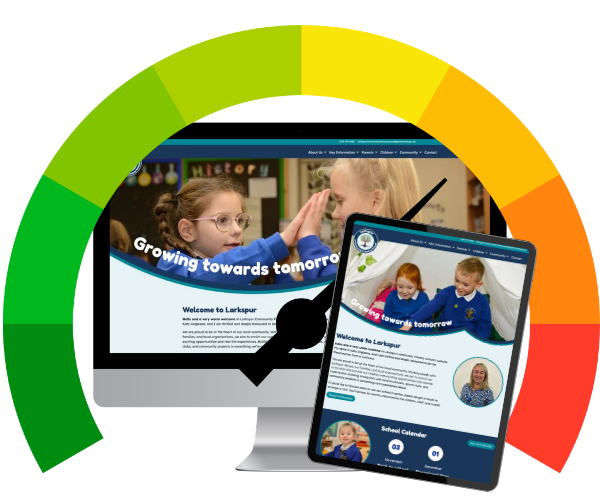
Performance optimisation, from image compression to hosting configuration, ensures your website supports credibility rather than undermining it.
As part of any structured review, we always assess performance alongside structure and usability.
5. Accessibility & Usability
Accessibility is not optional.
A high-performing school website:
Uses structured headings
Avoids text-heavy layouts
Ensures strong colour contrast
Makes information easy to scan
Is mobile responsive
Clear usability reduces repetitive phone calls and unnecessary admin queries.
If you’re unsure whether your current structure is helping or hindering, our practical guide on reviewing your school website without a full redesign explains how small structural changes can significantly improve usability.
6. Trust & Brand Clarity
Parents look for reassurance.
They want to understand your values, your leadership and your culture quickly.
A high-performing website:
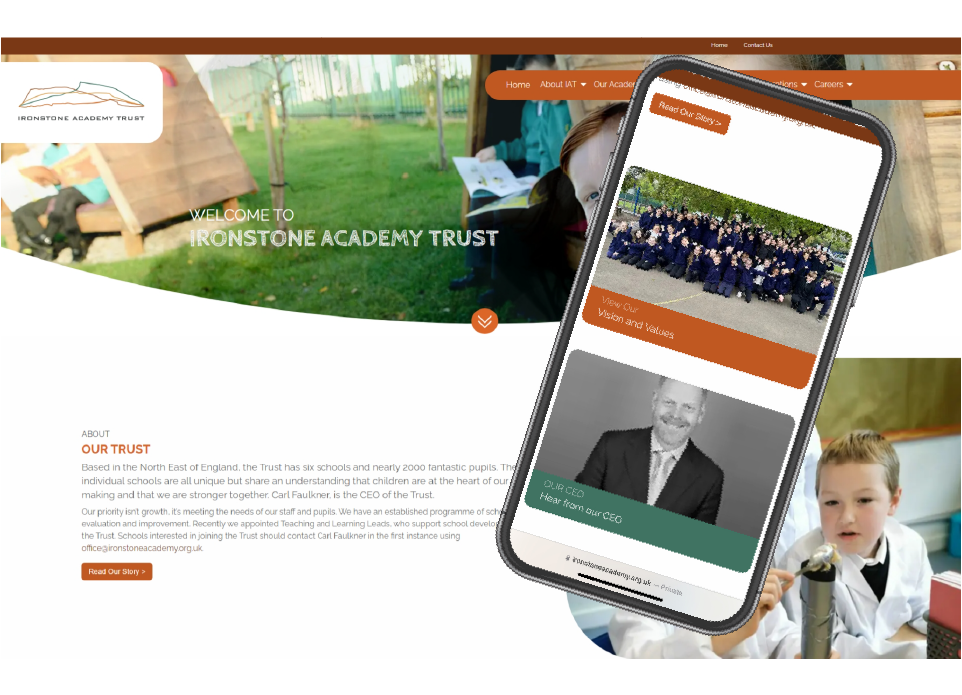
Communicates ethos clearly from the homepage
Maintains consistent tone
Uses authentic imagery
Reflects leadership confidence
For multi-academy trusts, consistency across websites is particularly important. In our discussion on MAT website strategy, we highlight how shared structure builds trust across multiple schools.
7. Future-Ready School Websites in 2026
School website expectations are evolving.
Increasingly, we are seeing:
Video headers that bring school life to life
Stronger admissions call-to-actions
Embedded video newsletters
Integrated forms and communication tools
Cleaner, mobile-first layouts
However, technology should enhance clarity, not replace it.
Design trends matter, but structure remains foundational.
8. The Importance of Regular Review
The best school websites are not rebuilt constantly — they are reviewed regularly.
We recommend:
Annual structural review
Admissions journey testing
Termly compliance checks
Periodic performance assessment
Often, small tweaks outperform full redesigns.
If you’re unsure where to start, a structured school website audit can provide clarity around what is working, what needs adjusting and what can be improved without unnecessary disruption.
Not Sure Where Your Website Stands?
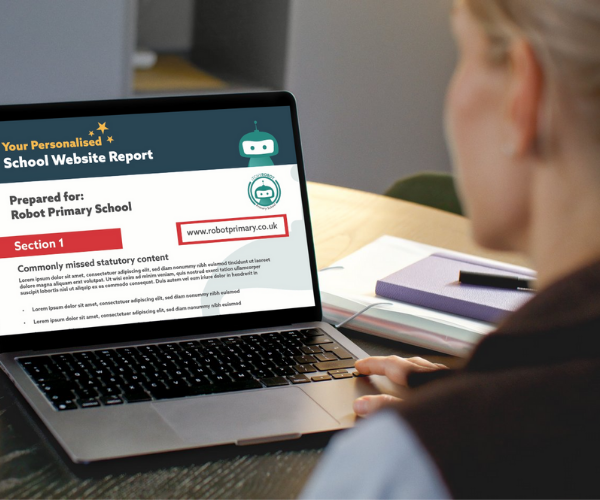
If you’re unsure whether your school website is truly high-performing, our structured School Website Audit evaluates:
Structure
Performance
Compliance visibility
Usability
Admissions journey
It’s practical, constructive and designed for busy school leaders.
Frequently Asked Questions About School Websites
What makes a high-performing school website?
A high-performing school website is structured, strategic and easy to navigate. It supports admissions, integrates compliance and reduces administrative workload. It is built around user needs rather than internal documentation systems.
What are the statutory requirements for school websites?
Schools must publish specific information online, including safeguarding policies, governance details, curriculum content and accessibility statements. The information must be visible and accessible, not simply uploaded.
How often should a school website be reviewed?
We recommend an annual structural review alongside regular compliance checks. Websites naturally drift over time, and small adjustments prevent larger issues.
Do schools always need a full redesign?
Not necessarily. In many cases, structural improvements rather than visual redesign provide the most significant gains in usability and clarity.
A high-performing school website should reduce pressure, not create it.
If your website feels heavy to manage or difficult to update, structure may be the missing piece.
Because schools deserve more than “it’ll do.”
iTCHYROBOT. School websites. But better.